내부 페이지 배너

블로그

블로그

How a Limestone Balustrade Becomes a Buildable Component Set

How a Limestone Balustrade Becomes a Buildable Component Set

Aug 19, 2026

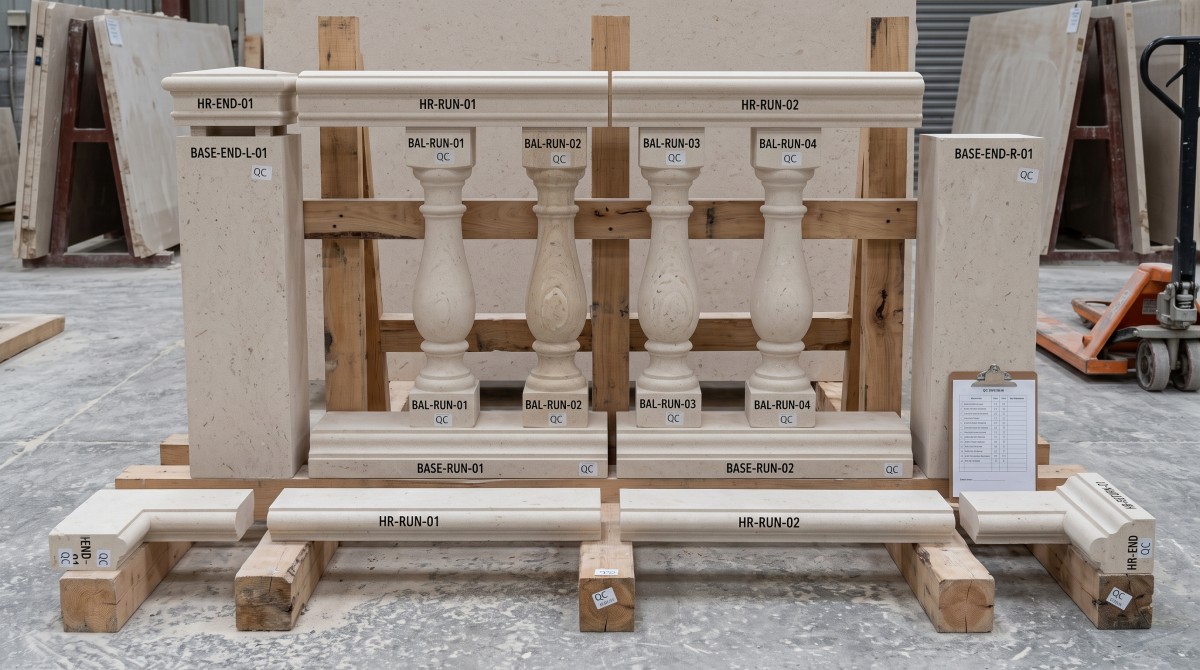
Moonlight Beige Limestone handrail, balusters, base and end pieces arranged as a component system


A completed limestone balustrade may look like one continuous architectural element. In production, it is a system of separate components.

The handrail, repeated balusters, lower base, end pieces, corner conditions and adjacent wall or stair connections all have different geometry. Each piece must be identified, fabricated, checked and packed so that the system can be assembled according to the project drawings.

This is why a custom stone balustrade should not be quoted or produced from one perspective rendering alone.


The main components

Handrail or coping piece


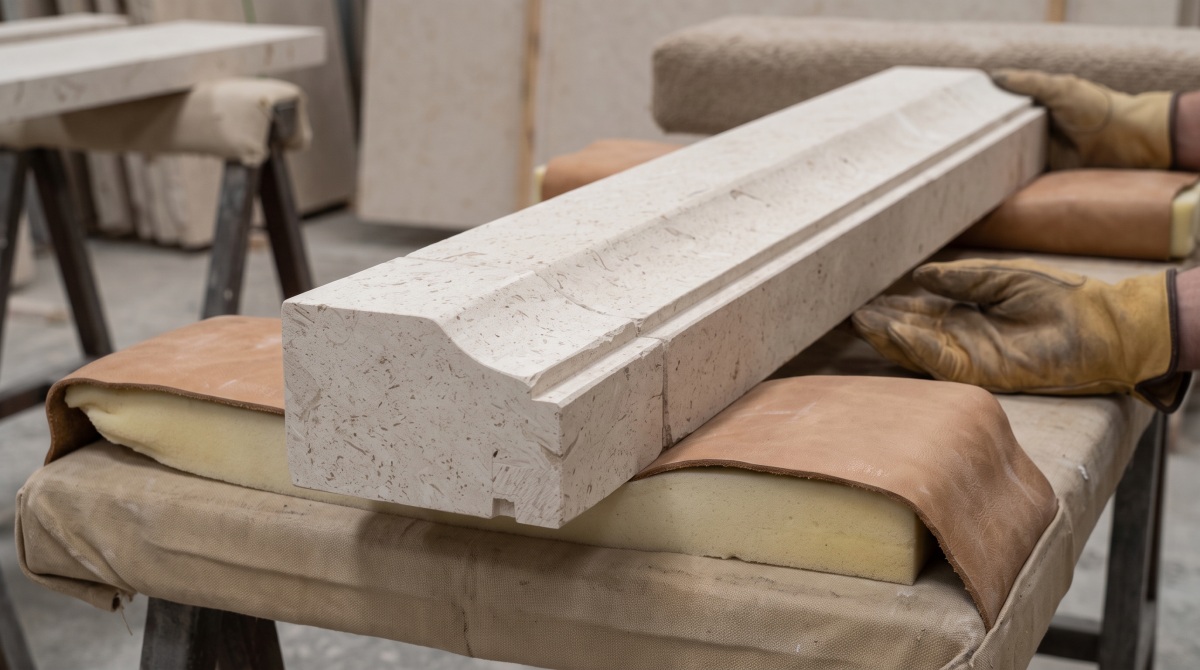
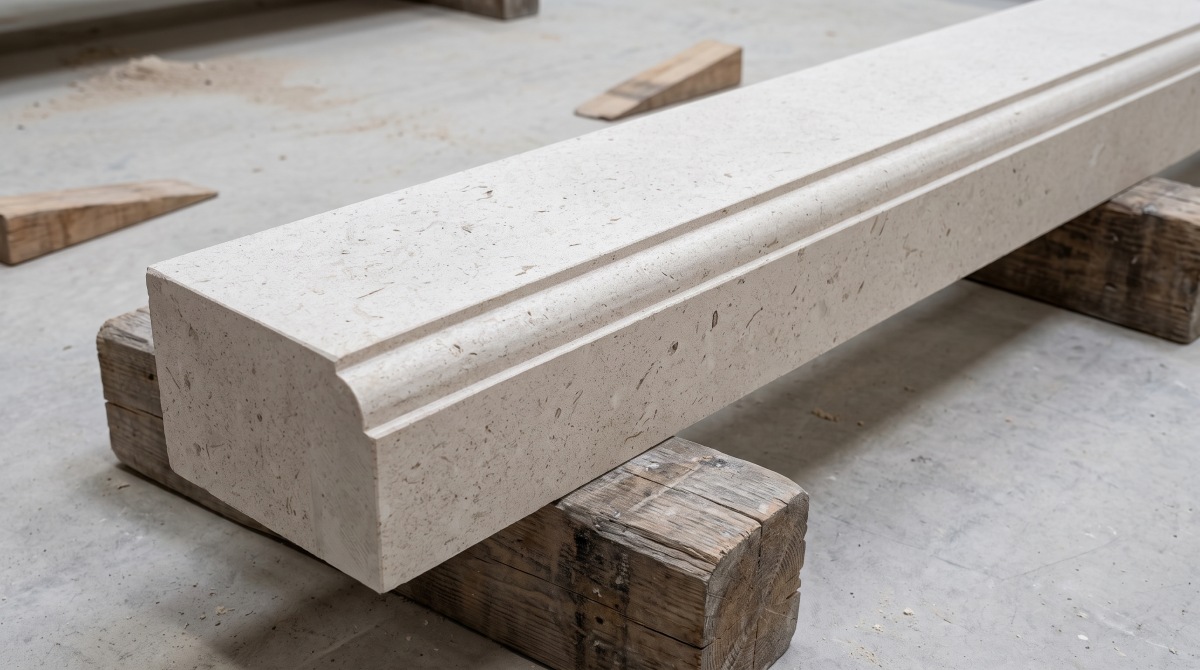
Moonlight Beige Limestone handrail profile showing top shape, joint and end treatment


The upper rail creates the continuous visible line of the balustrade. Its profile may include curved faces, grooves, eased edges, flat bearing areas and joints between sections.

For production review, the drawing should define the profile section, length of each piece, joint locations, end conditions and any corner or return pieces.

Long rails may need to be divided into practical transport and installation lengths. The division should follow the design and site access rather than being decided only after fabrication begins.


Baluster


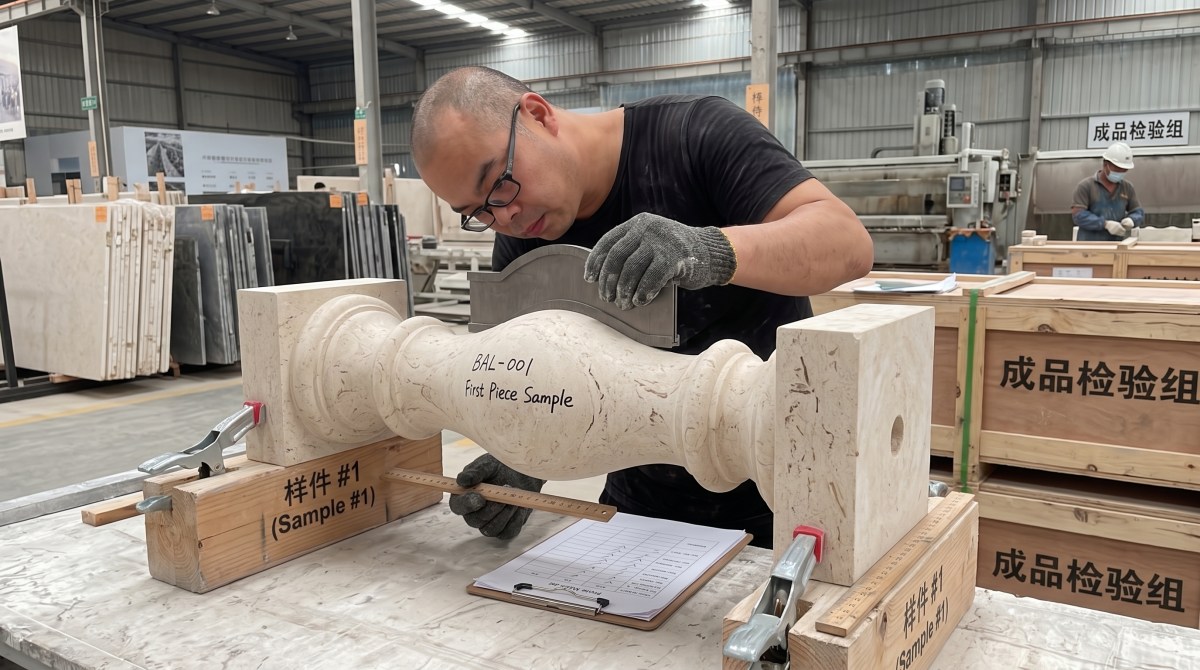
First Moonlight Beige Limestone baluster checked for profile, base and top connection


Balusters are repeated vertical elements. Their visual rhythm depends on consistent shape, height, orientation and spacing.

The stone fabricator needs a dimensioned profile or an approved master sample. A photograph of a classical baluster may communicate style but not production geometry.

Checks can include overall height, top and bottom connection areas, maximum profile width, repeated shape and visible surface condition. Structural spacing, anchoring and code compliance remain the responsibility of the project’s qualified designer and installer.


Base or lower rail


Moonlight Beige Limestone lower rail showing baluster seats, joints and visible edges


The base supports the visual transition between the balusters and the floor, parapet or stair edge. It may be a continuous profiled rail, separate plinth pieces or a combination of stone elements.

The drawing should show how the baluster meets the base, where water or debris could collect in exterior conditions, how joints align and which faces remain visible after installation.


End, corner and return pieces


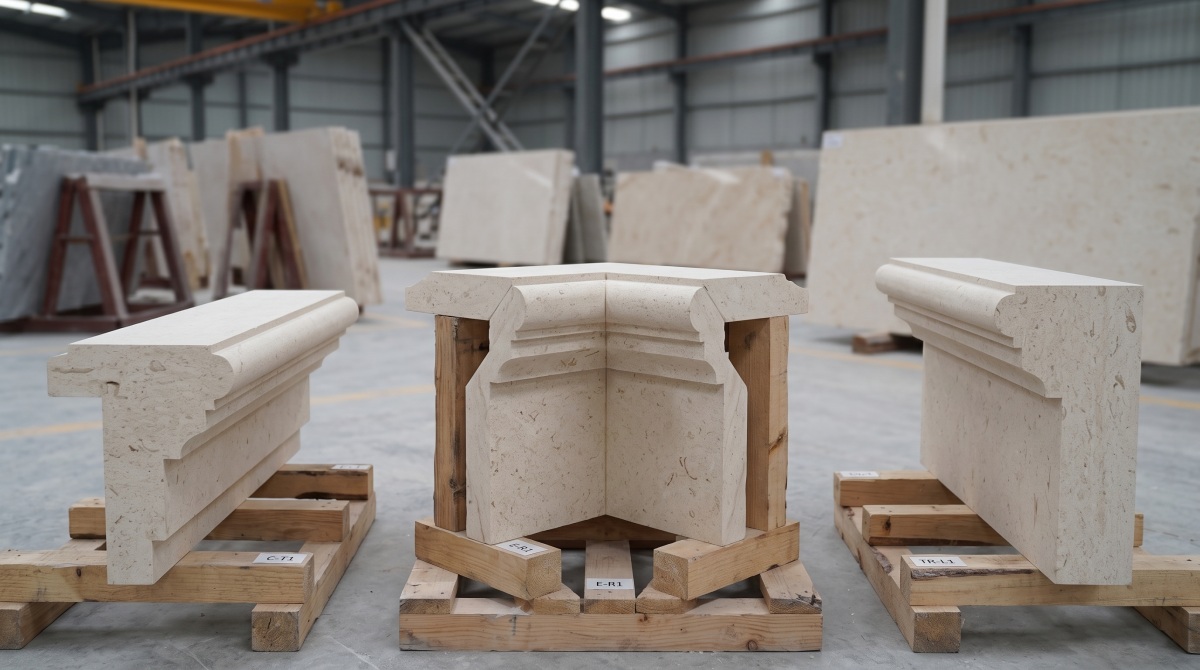
 Limestone balustrade end, corner and return components separated for review


Straight repeated pieces are usually not the most difficult part. End conditions, turns and changes in level often carry more risk.

These pieces need clear plan and section information. A corner that is visually acceptable from the front may be impossible to assemble if the return, joint or support condition has not been defined.


Why the component schedule matters


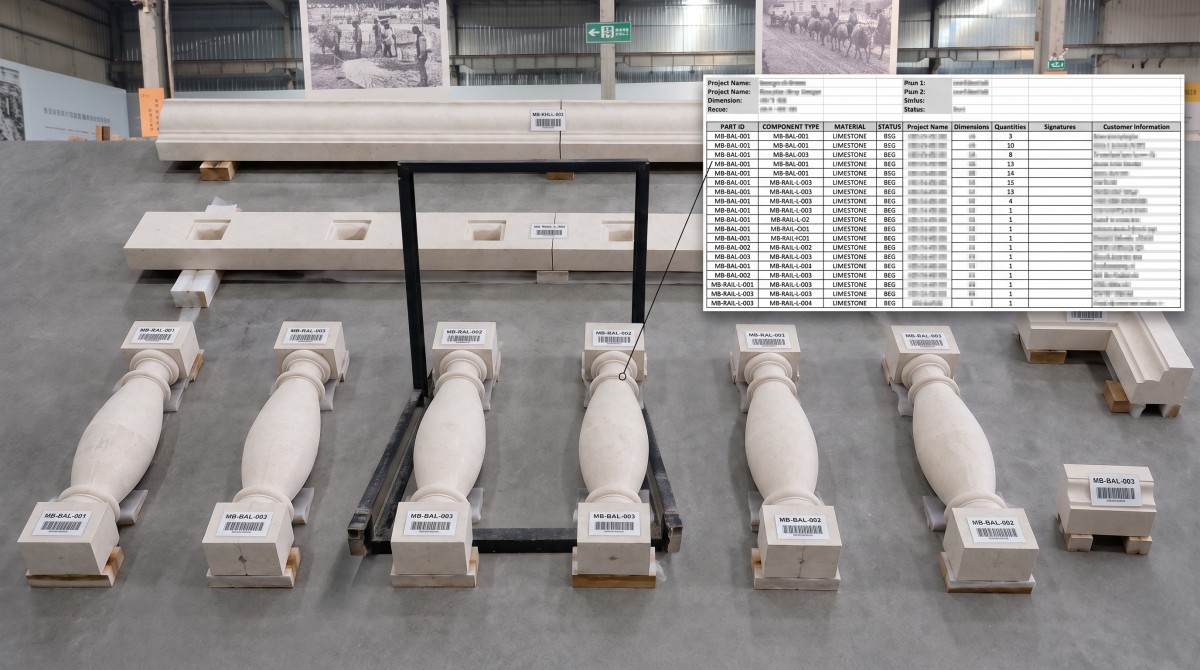
Numbered limestone balustrade components beside a blurred component schedule


A component schedule translates the design into a countable production package.

It should identify:

· Component type

· Drawing reference

· Dimensions

· Quantity

· Finish

· Visible faces

· Edge or profile code

· Location or sequence where needed

· Replacement allowance if specified

Without a component schedule, repeated pieces can be miscounted, special end pieces can be treated as standard parts and packing may not follow the installation sequence.


Dry lay should answer specific questions


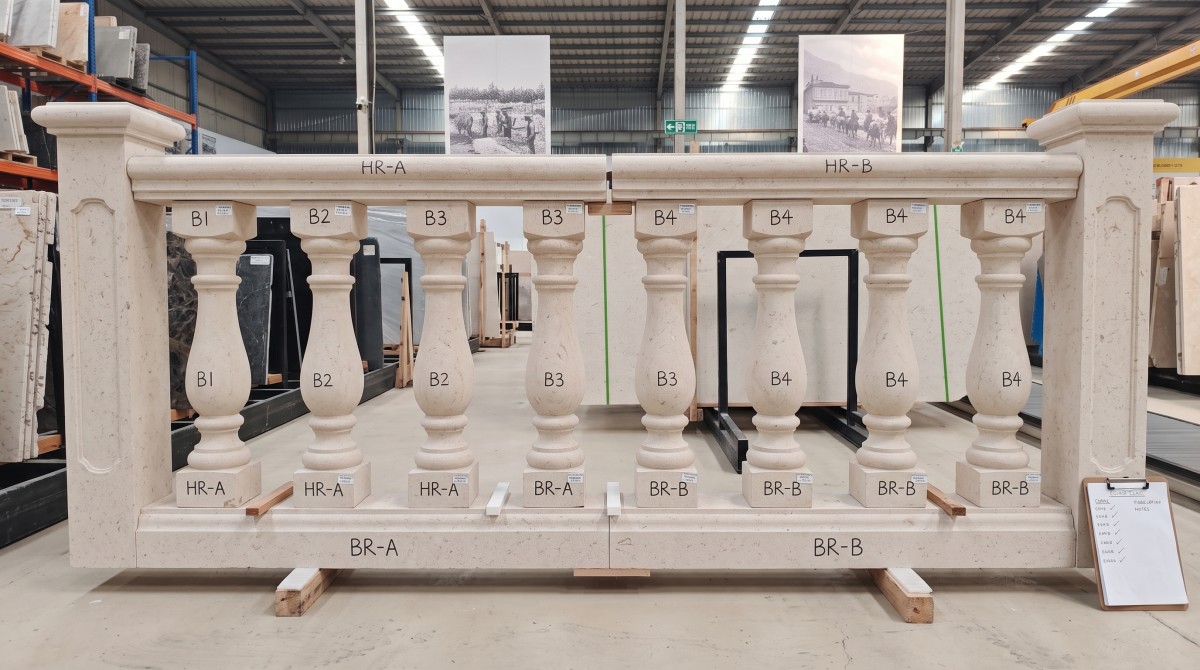
Moonlight Beige Limestone balustrade components dry laid to review joints and profile continuity


Dry laying balustrade parts does not prove structural performance or final installation quality. It is a factory review tool.

For a component set, dry lay can help check:

· Whether the handrail profile continues across joints

· Whether repeated balusters share the approved visual direction

· Whether bases and rails connect to the correct end pieces

· Whether corner and return components are present

· Whether the sequence is understandable before packing

The pieces should be supported safely on a clean, level inspection area. Confidential project codes and drawings should not be exposed in public marketing images.


Natural material still needs range control

When Moonlight Beige Limestone (also called Myra beige) is used for a balustrade, fossils and background tone continue across shaped surfaces. This can make the system feel materially coherent, but it also means that the buyer should approve how much variation is acceptable between repeated components.

A very fossil-rich baluster beside a much cleaner group may attract attention. Tone grouping may help, but natural stone should not be promised as identical from piece to piece.

For visible repeated elements, review representative components rather than only flat-slab photos.


Packing a component set


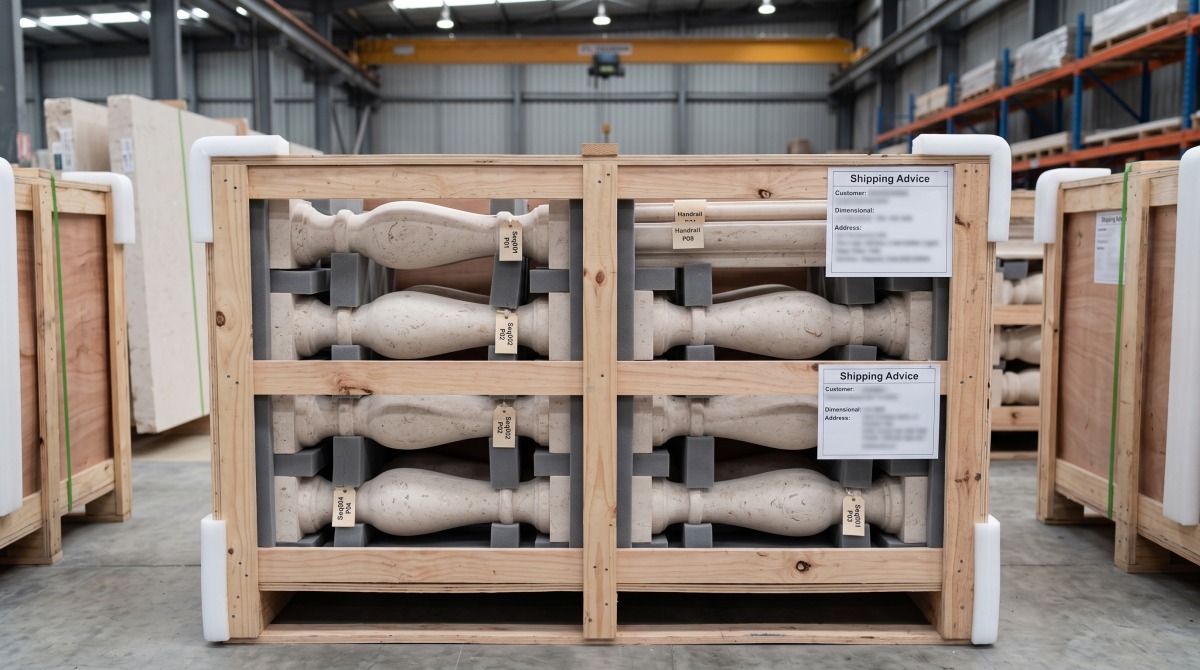
Moonlight Beige Limestone balustrade components protected and packed by piece sequence


Profiles, balusters and long rail pieces should not be packed like ordinary flat tiles.

Packing needs to consider:

· Stable support

· Separation between finished faces

· Protection for corners and projecting profiles

· Restraint against movement

· Clear identification of component groups

· Practical unloading and site access

Packing reduces handling risk but cannot remove it. The buyer and site team should plan lifting, storage and installation according to the weight, shape and fragility of the actual components.


What to send for review

For a Moonlight Beige Limestone balustrade or related architectural detail, send:

1. Plan and elevation

2. Handrail section

3. Baluster drawing or approved model

4. Base and connection details

5. Corner, end and return conditions

6. Quantities

7. Finish

8. Required component numbering

9. Destination and packing requirements

Aoli Stone can review whether the information is sufficient to prepare a fabrication discussion and quotation. This review does not replace structural design, site measurement or installation engineering.

Learn about Aoli Stone’s stone-processing support and send balustrade or component drawings for more discussion.

메시지를 남겨주세요

메시지를 남겨주세요
당사 제품에 관심이 있으시면 메시지를 남겨주세요. 최대한 빠른 답변드리겠습니다.
제출하다

제품

whatsApp

연락하다